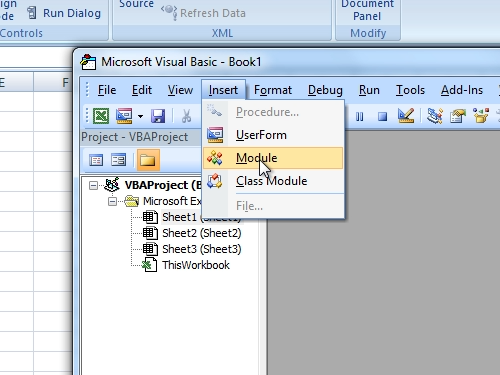
To create a custom DISCOUNT function in this workbook, follow these steps: Press Alt+F11 to open the Visual Basic Editor (on the Mac, press FN+ALT+F11), and then click Insert > Module. A new module window appears on the right-hand side of the Visual Basic Reasonable and competitive prices for our premium How To Write A Custom Function In Excel writing, formatting, editing and proofreading services; Thorough, revolutionary and in-depth research, no matter the complexity of the work ordered; Plagiarism-free pieces of writing /10() Sep 02, · To create a function, open a new Excel workbook and create a small worksheet as shown in the image to the right: I’ll show you how to create a custom function to calculate the selling price of an item using the following formula: selling price – cost price * (1+markup percentage) To make this calculation in cell D4 of the example worksheet (given the markup percentage is 50%) you would write
Create custom functions in Excel - Office Support
Instead, Excel provides you with the ability to create custom functions, which are explained in this article. Custom functions, like macros, use the Visual Basic for Applications VBA programming language. They differ from how to write a custom function in excel 2007 in two significant ways. First, they use Function procedures instead of Sub procedures. That is, they start with a Function statement instead of a Sub statement and end with End Function instead of End Sub.
Second, they perform calculations instead of taking actions. Certain kinds of statements, such as statements that select and format ranges, are excluded from custom functions. To create functions and macros, you work with the Visual Basic Editor VBEwhich opens in a new window separate from Excel. Suppose your company offers a quantity discount of 10 percent on the sale of a product, provided the order is for more than units. In the following paragraphs, we'll demonstrate a function to calculate this discount.
The example below shows an order form that lists each item, quantity, price, discount if anyand the resulting extended price. A new module window appears on the right-hand side of the Visual Basic Editor. Note: To make your code more readable, you can use the Tab key to indent lines. The indentation is for your benefit only, and is optional, as the code will run with or without it.
After you type an indented line, the Visual Basic Editor assumes your next line will be similarly indented. Close the Visual Basic Editor, select cell G7, and type the following:. In the first line of your VBA code, Function DISCOUNT quantity, priceyou indicated that the DISCOUNT function requires two arguments, quantity and price. When you call the function in a worksheet cell, you must include those two arguments.
Now you can copy the DISCOUNT formula to G8:G13 to get the results shown below. When you press EnterExcel looks for the name DISCOUNT in the current workbook and finds that it is a custom function in a VBA module. The argument names enclosed in parentheses, quantity and priceare placeholders for the values on which the calculation of the discount is based. The If statement in the following block of code examines the quantity argument and determines whether the number of items sold is greater than or equal to If the number of items sold is greater than or equal toVBA executes the following statement, which multiplies the quantity value by the price value and then multiplies the result by 0.
The result is stored as the variable Discount. A VBA statement that stores a value in a variable is called an assignment statement, because it evaluates the expression on the right side of the equal sign and assigns the result to the variable name on the left.
Because the variable Discount has the same name as the function procedure, the value stored in the variable is returned to the how to write a custom function in excel 2007 formula that called the DISCOUNT function. Finally, the following statement rounds the value assigned to the Discount variable to two decimal places:. VBA has no ROUND function, but Excel does.
Therefore, to use ROUND in this statement, you tell VBA to look for the Round method function in the Application object Excel. You do that by adding the word Application before the word Round. Use this syntax whenever you need to access an Excel function from a VBA module.
A custom function must start with a Function statement and end with an End Function statement. In addition to the function name, the Function statement usually specifies one or more arguments.
You can, however, create a function with no arguments. Following the Function statement, a function procedure includes one or more VBA statements that make decisions and perform calculations using the arguments passed to the function. Finally, somewhere in the function procedure, you must include a statement that assigns a value to a variable with the same name as the function.
This value is returned to the formula that calls the function. The number of VBA keywords you can use in custom functions is smaller than the number you can use in macros. Custom functions are not allowed to do anything other than return a value to a formula in a worksheet, or to an expression used in another VBA macro or function.
For example, custom functions cannot resize windows, edit a formula in a cell, or change the font, color, how to write a custom function in excel 2007, or pattern options for the text in a cell. The one action a function procedure can do apart from performing calculations is display a dialog box.
You can use an InputBox statement in a custom function as a means of getting input from the user executing the function. You can use a MsgBox statement as a means of conveying information to the user.
Even simple macros and custom functions can be difficult to read. You can make them easier to understand by typing explanatory text in the form of comments. You add comments by preceding the explanatory text with an apostrophe. For example, the following example shows the DISCOUNT function with comments. Adding comments like these makes it easier for you or others to maintain your VBA code as time passes.
An apostrophe tells Excel to ignore everything to the right on the same line, so you can create comments either on lines by themselves or on the right side of lines containing VBA code. You might begin a relatively long block of code with a comment that explains its overall purpose and then use inline comments to document individual statements.
Another way to document your macros and custom functions is to give them descriptive names. For example, rather than name a macro Labelsyou could name it MonthLabels to describe more specifically the purpose the macro serves. How you document your macros and custom functions is a matter of personal preference. To use a custom function, the workbook containing the module in which you created the function must be open, how to write a custom function in excel 2007.
If that workbook is not open, you get a NAME? error when you try to use the function. If you reference the function in a different workbook, you must precede the function name with the name of the workbook in which the function resides. For example, if you create a function called DISCOUNT in a workbook called Personal. You can save yourself some keystrokes and possible typing errors by selecting your custom functions from the Insert Function dialog box, how to write a custom function in excel 2007.
Your custom functions appear in the User Defined category:. An how to write a custom function in excel 2007 way to make your custom functions available at all times is to store them in a separate workbook and then save that workbook as an add-in. You can then make the add-in available whenever you run Excel.
In Excelclick the Microsoft How to write a custom function in excel 2007 Buttonand click Save As. In the Save As dialog box, open the Save As Type drop-down list, and select Excel Add-In. Save the workbook under a recognizable name, such as MyFunctionsin the AddIns folder. The Save As dialog box will propose that folder, so all you need to do is accept the default location. In Excelclick the Microsoft Office Buttonand click Excel Options.
In the Excel Options dialog box, how to write a custom function in excel 2007 the Add-Ins category. In the Manage drop-down list, select Excel Add-Ins. Then click the Go button. In the Add-Ins dialog box, select the check box beside the name you used to save your workbook, as shown below. Save the workbook under a recognizable name, such as MyFunctions.
In the Add-Ins dialog box, select the Browse button to find your add-in, click Openthen check the box beside your Add-In in the Add-Ins Available box. After you follow these steps, your custom functions will be available each time you run Excel. If you want to add to your function library, return to the Visual Basic Editor. If you look in the Visual Basic Editor Project Explorer under a VBAProject heading, you will see a module named after your add-in file.
Your add-in will have the extension. Double-clicking that module in the Project Explorer causes the Visual Basic Editor to display your function code. To add a new function, position your insertion point after the End Function statement that terminates the last function in the Code window, and begin typing. You can create as many functions as you need in this manner, and they will always be available in the User Defined category in the Insert Function dialog box. This content was originally authored by Mark Dodge and Craig Stinson as part of their book Microsoft Office Excel Inside Out.
It has since been updated to apply to newer versions of Excel as well. You can always ask an expert in the Excel Tech Community or get support in the Answers community. Create custom functions in Excel Excel for Microsoft Excel for Microsoft for Mac Excel for the web Excel Excel Excel for Mac Excel Excel Excel Excel for Mac More Copy and paste the following code to the new module.
Round Discount, 2 End Function Note: To make your code more readable, you can use the Tab key to indent lines. Round Discount, 2 VBA has no ROUND function, but Excel does. Your custom functions appear in the User Defined category: An easier way to make your custom functions available at all times is to store them in a separate workbook and then save that workbook as an add-in.
In Excelclick the Microsoft Office Buttonand click Save As In the Save As dialog box, open the Save As Type drop-down list, and select Excel Add-In. Need more help? Expand your skills. Get how to write a custom function in excel 2007 features first.
A subscription to make the most of your time. Try one month free, how to write a custom function in excel 2007. Was this information helpful? Yes No. Thank you! Any more feedback? The more you tell us the more we can help.
Custom Function in Excel 2007
, time: 4:42
Jan 23, · Learn how to create a custom function in Microsoft ExcelDon't forget to check out our site blogger.com for more free how-to videos!blogger.com To create a custom DISCOUNT function in this workbook, follow these steps: Press Alt+F11 to open the Visual Basic Editor (on the Mac, press FN+ALT+F11), and then click Insert > Module. A new module window appears on the right-hand side of the Visual Basic Editor. Copy and Sep 02, · To create a function, open a new Excel workbook and create a small worksheet as shown in the image to the right: I’ll show you how to create a custom function to calculate the selling price of an item using the following formula: selling price – cost price * (1+markup percentage) To make this calculation in cell D4 of the example worksheet (given the markup percentage is 50%) you would write

No comments:
Post a Comment